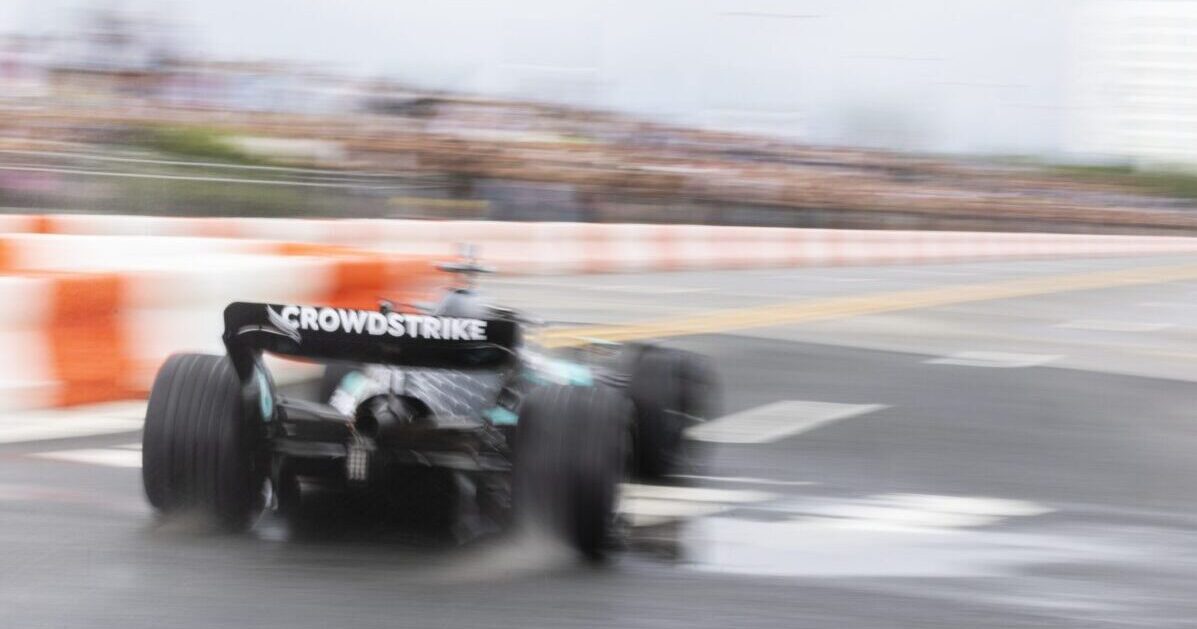
In a recent discussion, a former official from NASA's Jet Propulsion Laboratory (JPL) highlighted the significant similarities between the space industry and Formula 1 racing. Both fields are at the forefront of technological innovation, pushing the boundaries of what is possible through relentless pursuit of excellence and cutting-edge research.
According to the former JPL expert, the space sector and Formula 1 share core principles such as rapid development cycles, high-stakes competition, and a focus on precision engineering. These industries require teams to operate under immense pressure, often with limited resources, to achieve breakthroughs that can have far-reaching impacts.
In the realm of space exploration, companies and agencies are constantly developing new propulsion systems, spacecraft designs, and autonomous navigation technologies. Similarly, Formula 1 teams innovate continuously, refining aerodynamics, materials, and telemetry systems to gain even the slightest advantage on the track.
The expert emphasized that both sectors heavily rely on data analysis and simulation. In Formula 1, real-time telemetry allows teams to make immediate adjustments during races, while in space missions, extensive simulations are used to predict outcomes and troubleshoot potential issues before deployment.
Furthermore, collaboration and teamwork are crucial in both industries. Engineers, scientists, and technicians work in tightly integrated teams, often across multiple countries, to achieve shared goals. This collaborative spirit fosters a culture of innovation and resilience, essential for overcoming complex challenges.
Funding and sponsorship also play pivotal roles. In Formula 1, sponsorship deals provide vital financial support, enabling teams to invest in research and development. Similarly, space missions often depend on government funding or private investments to sustain their ambitious projects.
Despite their differences in application, the underlying technological advancements in both sectors often cross-pollinate. Innovations in materials science, data processing, and automation developed for Formula 1 have found applications in spacecraft design, and vice versa.
Ultimately, the former JPL official concluded that the shared traits of innovation, precision, and relentless pursuit of progress make the space industry and Formula 1 racing more alike than one might initially think. Both fields exemplify human ingenuity and the drive to explore new frontiers, whether on Earth or beyond.